
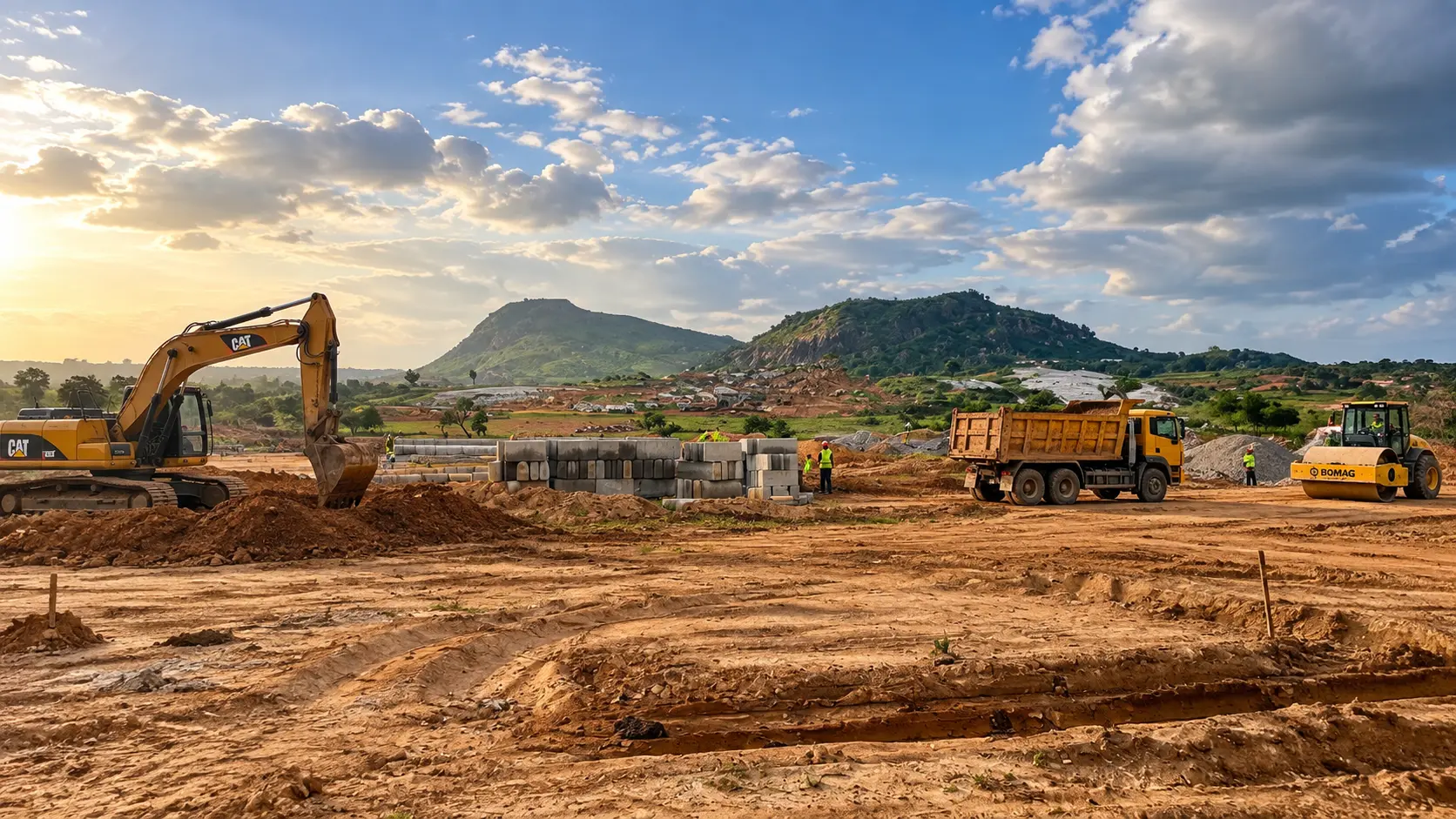
A completed building may look simple when viewed from the outside, but bringing a property from a piece of land to a finished home requires careful planning, technical expertise and coordinated execution.
Every successful development begins long before the first block is laid.
Step 1: Land Acquisition and Due Diligence
The process begins with identifying and securing suitable land.
Before development, important factors such as ownership, title documentation, land use, accessibility, planning requirements, soil conditions and surrounding infrastructure must be carefully assessed.
Step 2: Site Investigation
Understanding the site is essential before design and construction decisions are finalised.
Professionals assess the soil, terrain, drainage conditions and other characteristics that may influence the building.
Step 3: Architectural and Engineering Design
Architects and engineers transform the development concept into detailed plans.
Architectural drawings establish the appearance, functionality and layout of the building, while structural and other engineering designs ensure that the proposed development is technically sound.
Step 4: Approvals and Pre-Construction Planning
Relevant drawings and documents are submitted for the necessary approvals.
At the same time, budgets, schedules, materials, labour and construction methodologies are planned.
Step 5: Foundation and Structural Works
Construction begins on site with setting out, excavation and foundation works.
The foundation transfers the building's loads safely into the ground and therefore requires careful execution.
The structural frame then progresses through stages such as columns, beams, slabs and walls.
Step 6: Roofing, Services and Finishing
Once the main structure is established, the project progresses into roofing, plumbing, electrical installations, plastering, screeding, tiling, painting, cabinetry and other finishing works.
Step 7: Quality Control and Handover
Before completion, the development undergoes inspections to identify defects, incomplete works and areas requiring correction.
Only after the necessary checks and finishing works are completed should the property be prepared for handover.
A quality property is not created by chance. It is the result of a well-managed process.
Related Reading

Blogs
Why Real Estate Remains One of Nigeria’s Most Reliable Wealth-Building Assets
Real estate has long been regarded as one of the most powerful ways to preserve and grow wealth. In Nigeria, where population growth, urbanisation and increasing demand for housing continue to shape the property market, real estate remains an attractive investment option for individuals, families and businesses.
Read More
Blogs
Property Title Documents in Nigeria: A Guide to Buying Land Safely
Buying land or property in Nigeria is a major investment. Before you make that payment, you must be able to answer one question: what exactly proves that this person has the right to sell this property to me?
Read More